

Table of Contents
Washing dishes is a daily household task that seems harmless, but for people who wear contact lenses, it can come with unexpected risks. Water, soap, grease, and even tiny particles from dishes can potentially affect eye health and lens safety. Many people do not realize that contact lenses are delicate and can easily trap harmful microorganisms if exposed to the wrong environment.
This blog explains in detail how dishwashing can affect your eyes and contact lenses, what risks you should be aware of, and how you can safely manage this routine task without compromising your eye health.
Understanding the Relationship Between Dishwashing and Contact Lenses
Contact lenses sit directly on the surface of your eyes, which makes them extremely sensitive to anything that comes in contact with them. When you are washing dishes, your hands are constantly exposed to water, detergent, and food particles. Even small splashes can carry bacteria or chemicals that may transfer to your lenses.
Water itself is not sterile. Tap water, in particular, may contain microorganisms such as Acanthamoeba, which can cause serious eye infections if trapped between the lens and the eye. Dishwashing increases the chances of accidental water splashes, making it important to understand the risks before engaging in the task while wearing lenses.
Common Risks of Dishwashing with Contact Lenses
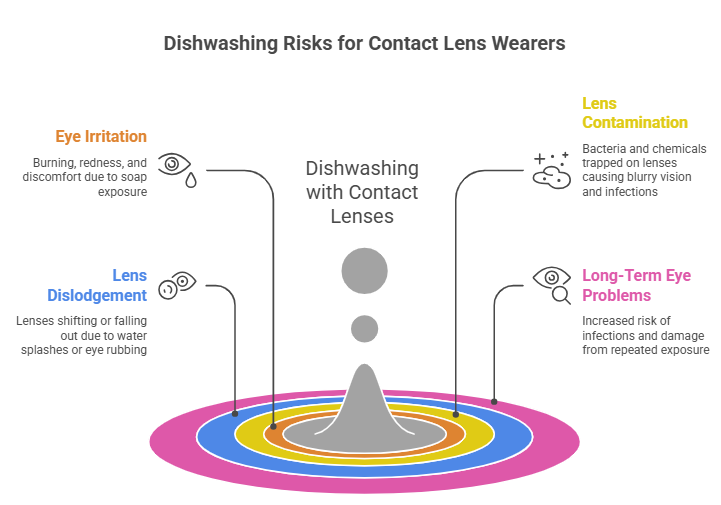
One of the main concerns is eye irritation. Dishwashing liquids contain strong cleaning agents designed to break down grease and food residue. If even a tiny amount of soap enters your eyes or comes into contact with your lenses, it can cause burning, redness, and discomfort.
Another risk is lens contamination. Contact lenses can absorb or trap small particles, including bacteria and chemical residues. Once contaminated, they can cause blurry vision, dryness, and even infections that may require medical treatment.
There is also a risk of accidental lens dislodgement. Water splashes or rubbing your eyes while washing dishes can cause a lens to shift or fall out, especially if your eyes become irritated.
Why Eye Safety Matters During Household Cleaning
Eye health is often overlooked during household chores, but it plays a critical role in overall well-being. Contact lenses are designed for clarity and convenience, but they also require careful handling. Exposure to cleaning agents, hot water steam, and airborne particles can increase the risk of complications.
Even mild irritation can lead to frequent eye rubbing, which may worsen the condition or scratch the surface of the eye. That is why protecting your lenses during dishwashing is not just about comfort, but also about preventing long-term eye problems.
Best Practices for Protecting Contact Lenses While Washing Dishes
One of the safest approaches is to avoid wearing contact lenses while washing dishes. If possible, switching to glasses during this task significantly reduces the risk of contamination or irritation.
If you prefer to wear lenses, make sure your hands are thoroughly washed and dried before touching your eyes or adjusting your lenses. Avoid splashing water directly onto your face and keep your head slightly tilted away from the sink to minimize exposure.
Using gloves can also be helpful. Rubber or silicone gloves act as a barrier between your hands and dishwater, reducing the chance of detergent or bacteria transfer. This is especially useful if you are sensitive to cleaning products.
Importance of Proper Hygiene During Dishwashing
Hygiene plays a major role in eye safety. Dishwashing involves handling dirty plates, utensils, and leftover food, all of which can carry bacteria. When combined with contact lens use, poor hygiene can significantly increase the risk of eye infections.
Always ensure that your kitchen sink and surrounding area are clean. Avoid leaving stagnant water in the sink, and rinse dishes thoroughly to remove detergent residues. Clean hands are essential before and after the task to prevent accidental contamination of your eyes.
How Dishwashing Affects Different Types of Contact Lenses
Soft contact lenses are more prone to absorbing chemicals and water compared to rigid gas permeable lenses. This makes them more vulnerable during dishwashing. Even brief exposure to soapy water can alter their structure and comfort level.
Daily disposable lenses may reduce some risks since they are replaced frequently, but they are still not immune to contamination. Reusable lenses require extra care, especially when exposed to household cleaning environments.
Regardless of the type of lens, exposure to water and cleaning agents should always be minimized to maintain eye health.
Signs of Eye Irritation After Dishwashing
If your eyes feel uncomfortable after washing dishes, it is important to recognize early warning signs. Symptoms may include redness, itching, watery eyes, or a burning sensation. You may also experience blurred vision or a feeling that something is stuck in your eye.
These symptoms should not be ignored, especially if you wear contact lenses regularly. Removing your lenses immediately and rinsing your eyes with sterile solution can help reduce irritation. If discomfort persists, consulting an eye care professional is strongly recommended.
Long-Term Eye Care Tips for Contact Lens Users
Maintaining good eye health goes beyond just avoiding water exposure. Regular cleaning of lenses, proper storage in disinfecting solution, and following replacement schedules are essential habits.
It is also important to give your eyes rest by occasionally switching to glasses, especially during household chores or long hours of screen time. Keeping your lenses and storage case clean reduces the risk of infection and ensures long-term comfort.
Routine eye check-ups can help detect early signs of damage or sensitivity, allowing you to make necessary adjustments to your lens care routine.
Conclusion
Dishwashing may seem like a simple daily task, but for contact lens wearers, it carries certain risks that should not be ignored. From chemical exposure to bacterial contamination, the eyes can easily become irritated if proper precautions are not taken.
By adopting safe habits such as using protective eyewear, wearing gloves, or temporarily switching to glasses, you can significantly reduce these risks. Eye health is delicate, and even small preventive steps can make a big difference in maintaining clear and comfortable vision.
FAQs
Can I wear contact lenses while washing dishes?
Yes, you can, but it is not recommended. Water and dishwashing liquids can contaminate lenses and cause irritation or infection.
What happens if soap water gets into my contact lenses?
Soap can irritate your eyes, cause burning sensations, and potentially damage the lens surface, making it uncomfortable to wear.
Is tap water dangerous for contact lenses?
Yes, tap water may contain microorganisms that can lead to serious eye infections if they come into contact with lenses.
How can I protect my eyes while doing dishes?
You can wear glasses instead of lenses, use protective gloves, and avoid splashing water toward your face.
What should I do if my eyes feel irritated after dishwashing?
Remove your contact lenses immediately, rinse your eyes with sterile solution, and seek medical advice if irritation continues.


